
AI Agent Integration: Connecting Agents to CRM, ERP, and Enterprise Systems Without Downtime

A lot of enterprise AI agent pilots die in the same place: not in the model, but in the wiring that connects the agent to the systems it needs to touch. Your data science team can get an agent to reason well in a demo within days, yet getting that same agent to read a […]
AI Agent Tools: A Curated List of Platforms, SDKs, and Orchestration Layers

Most enterprise teams do not fail at AI agents because the technology is weak. They fail because they pick the wrong tool category first and discover the mismatch six weeks into a pilot. A no-code builder that looked perfect in a demo cannot handle the compliance logic your legal team requires, and a developer framework […]
AI Agent Lifecycle Management: From Prototype to Production to Retirement in the Enterprise
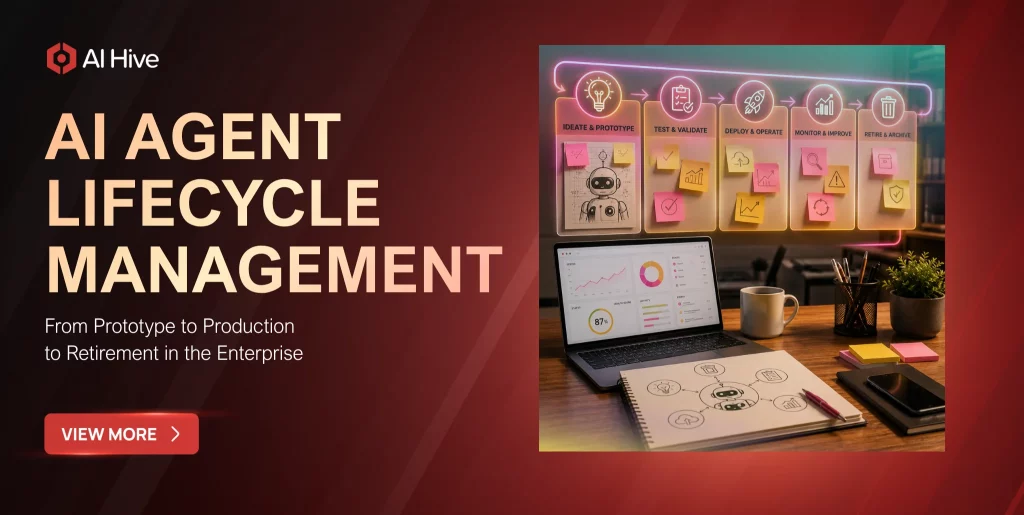
Most enterprise AI initiatives begin with promise and end in limbo. According to McKinsey’s 2024 State of AI report, fewer than 20% of enterprise AI projects ever reach full production deployment. The reasons are consistent across industries: teams build proof-of-concept agents that no one knows how to govern, scale, or eventually decommission. Without a disciplined […]
AI Agent Evaluation: Benchmarks, Scoring Methods, and Selection Criteria for Enterprise Buyers

Research in 2026 documents a 37% gap between AI agent lab benchmark scores and real-world deployment performance, with cost variation of up to 50 times for agents delivering similar accuracy. For enterprise buyers, that gap means vendor selection based on published benchmarks alone is insufficient. This article explains how to access AI agent evaluation of […]
AI Agent Observability: Tracing, Logging, and Debugging Multi-Agent Systems in Production
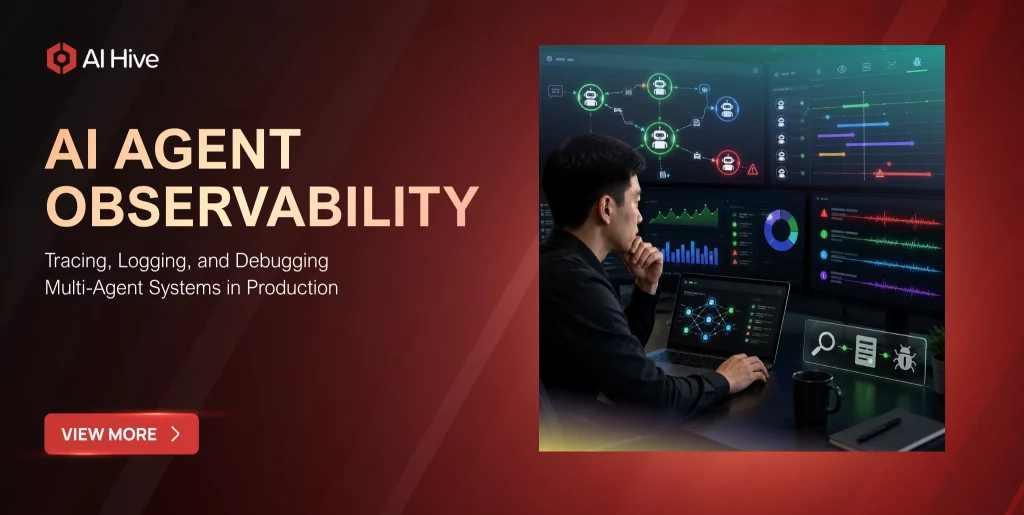
Multi-agent systems fail differently from single models. Errors cascade silently through chains of agent handoffs, tool calls, and memory operations until they surface as a broken user experience far downstream. AI agent observability is the discipline that lets your team see inside these chains while they run, trace failures to their root cause, and fix […]
AI Agent Monitoring: Metrics, Dashboards, and Alerting Patterns for Production AI in 2026
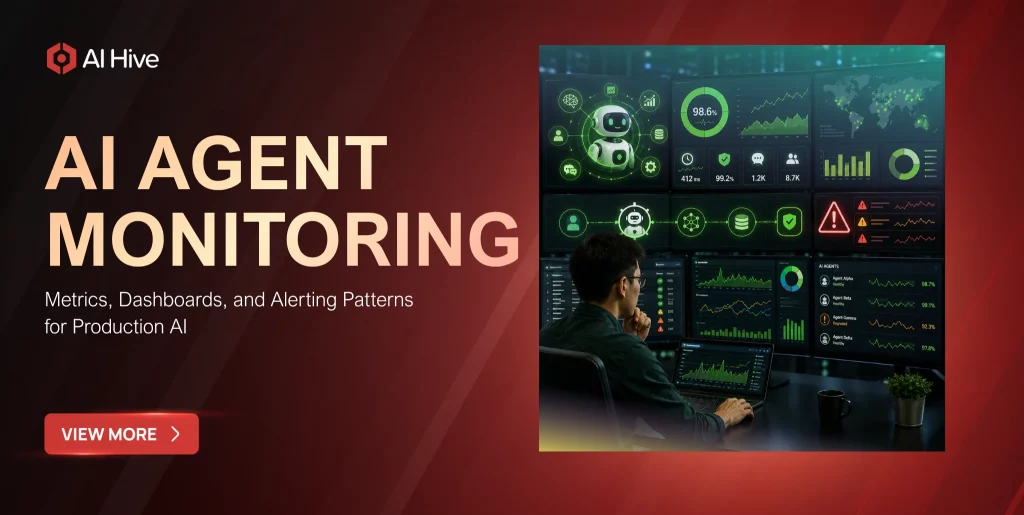
AI agent monitoring is the practice of tracking task-level decision quality, tool-call outcomes, and cost per task for production AI agents, not just system uptime. AI agent monitoring is not the same as traditional application performance monitoring (APM): infrastructure can show green while the agent itself is completing tasks incorrectly. When your AI agents move […]
Autonomous AI Agent: Capabilities, Risks, and Enterprise Guardrails You Need in 2026
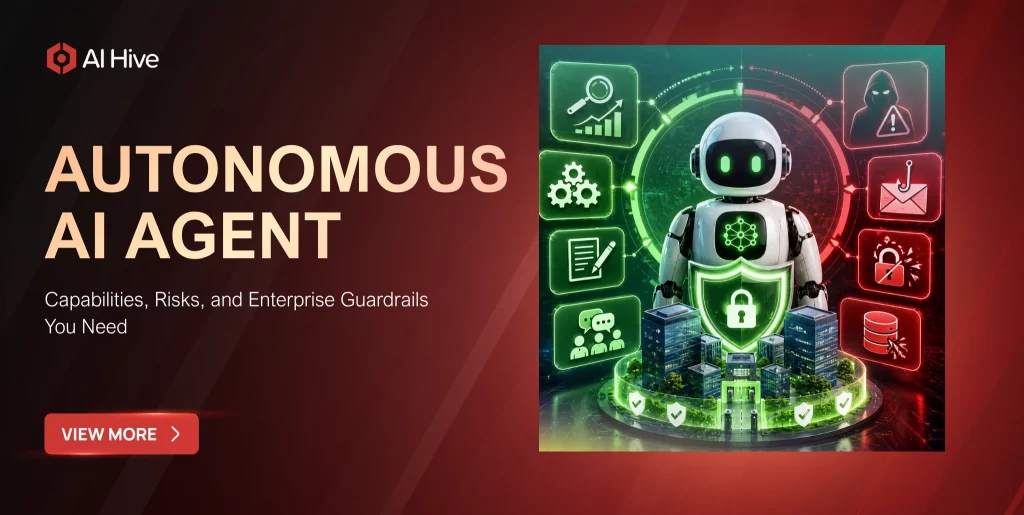
An autonomous AI agent is a software system that pursues a goal by making its own intermediate decisions, selecting tools, taking actions, and adapting to feedback without a human directing each step. An autonomous AI agent is not simply a more capable chatbot: the difference is that it acts on systems, not just responds in […]
AI Agent Framework Comparison 2026: LangChain vs CrewAI vs AutoGen vs Enterprise Platforms
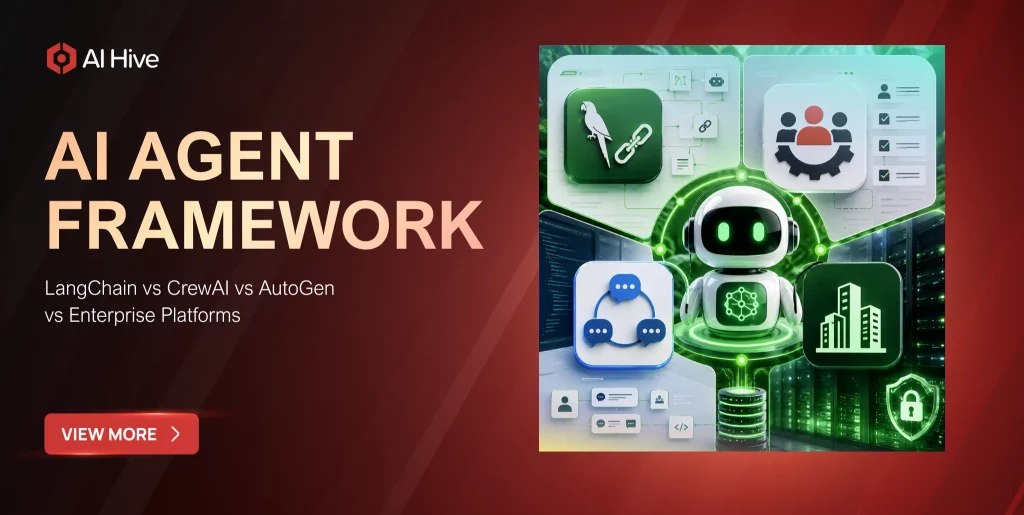
An AI agent framework is the software toolkit your engineering team uses to build, orchestrate, and deploy autonomous AI agents. It is not a finished enterprise platform: a framework governs how agents reason and act, but on its own it does not manage security, compliance, or production-grade observability. By mid-2026, 68% of enterprise development teams […]
AI Agent Architecture: Design Patterns for Production-Grade Enterprise Systems
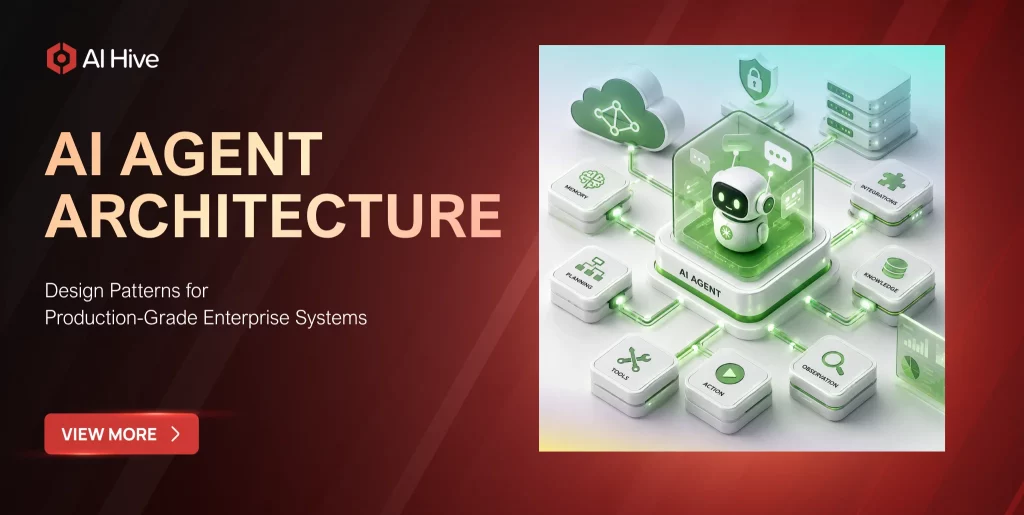
According to Gartner’s 2026 Hype Cycle for Agentic AI, 40% of agentic AI projects will be canceled by the end of 2027 – not because the technology failed, but because the underlying architecture was never designed to survive contact with enterprise reality. The gap between a compelling proof-of-concept and a system that handles millions of […]
AI Agent vs RPA: Why Robotic Process Automation Alone Fails Enterprise Operations
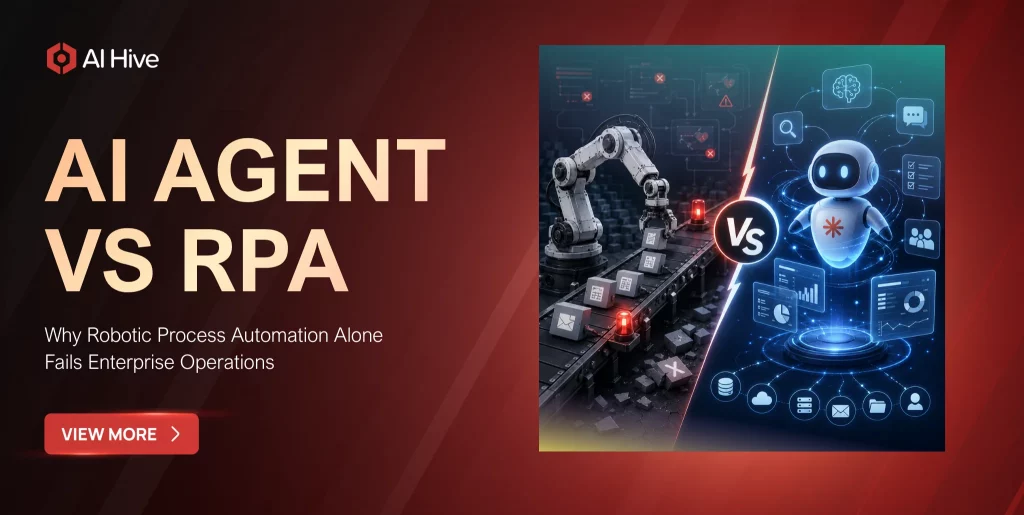
Robotic Process Automation promised to transform enterprise operations by scripting repetitive tasks-clicking buttons, copying data between systems, filling forms-at machine speed. For a while, it delivered on that promise. Then reality intervened. Deloitte’s 2026 Intelligent Automation Survey reports that 30-50% of RPA projects fail outright, and organizations that do achieve initial success spend 60-75% of […]